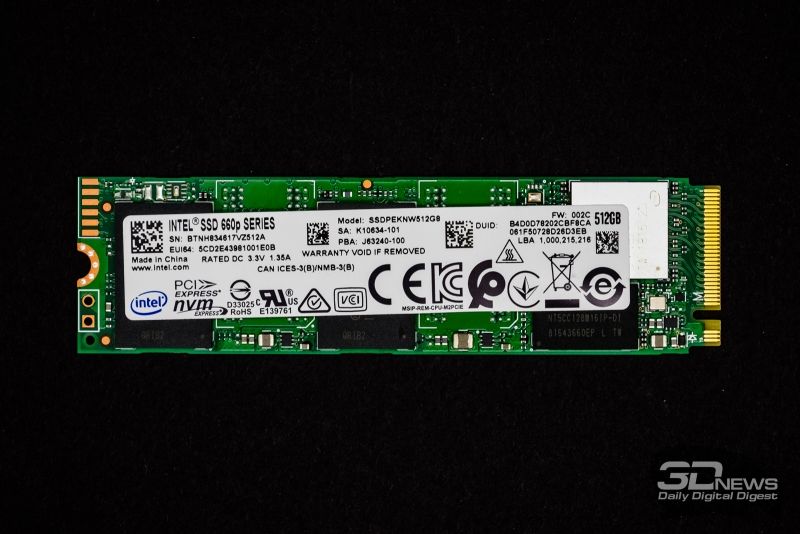
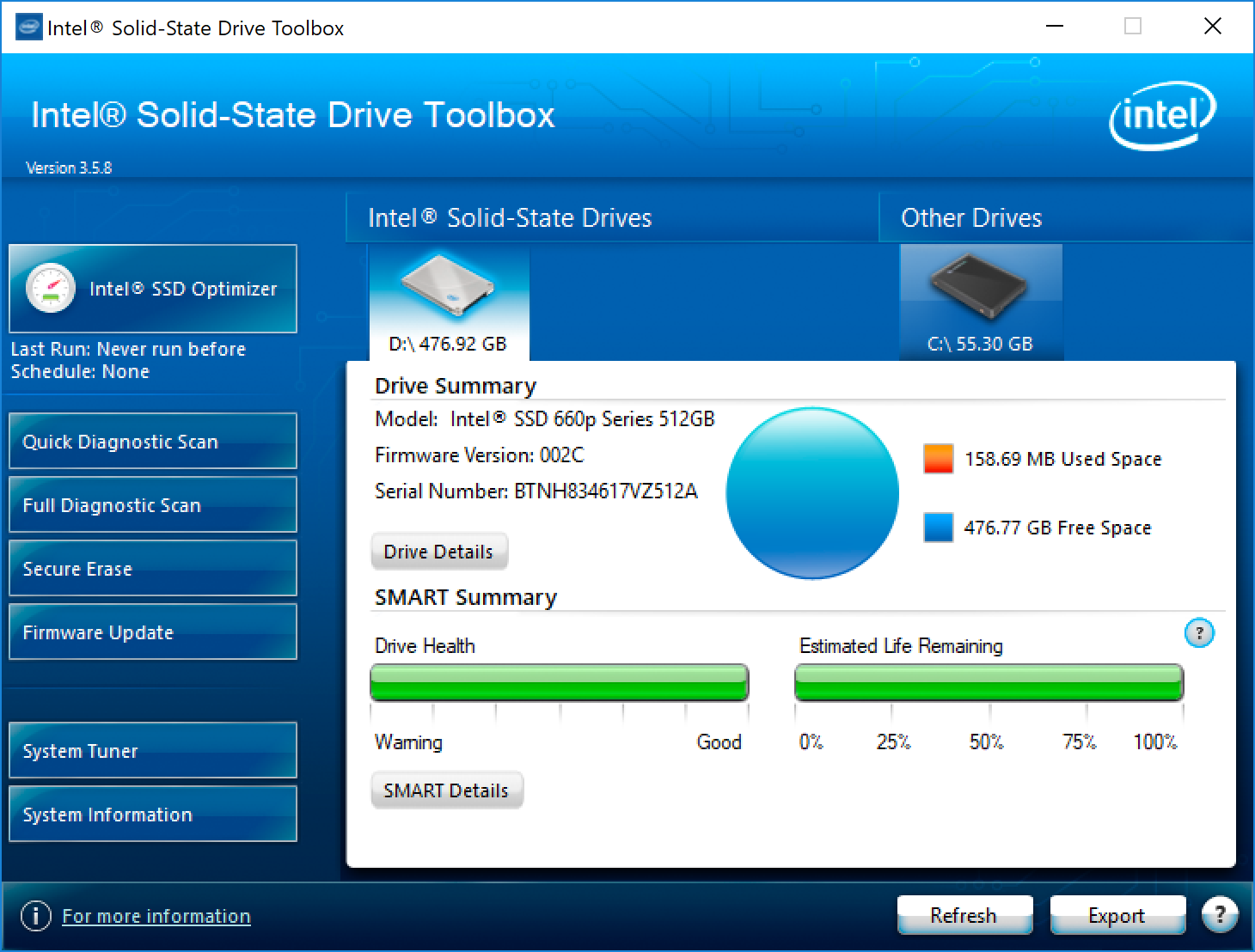
Podczas kopiowania, rozpakowywania dużych archiwum (kilka, kilkanaście GB) w obrębie jednego dysku SSD NVME laptop zdecydowanie zwalnia. W takim stopniu, że praca na nim jest niemożliwa, aż do momentu końca kopiowania. To prawdopodobnie przepełniony bufor dysku SSD. Czy to tyczy się wszystkich SSD na magistrali PCIE? Dysk to Intel SSDPEKNW512G8. Myślałem nad wymianą na ADATA XPG SX8200, ale nie wiem czy na tym dysku problem będzie również występował czy nie.
Seria Intel SSD 660p M.2 2280
PCI Express 3.0 x4 – NVMe 1.3
Flash -cache Intel QLC 3D NAND
Bufer DDR3L, 256 MB
kontroler Silicon Motion SM2263 czyli "ucięty" klon 4-channel dobrego (8-channel) SM2262 stosowanego w lepszej serii SSD 760p
* firmware ( 002C)
* NVMe-drivers:
1. Intel Client NVMe Driver 4.0.0.1007;
2. Microsoft Windows NVMe Driver 10.0.16299.371;
Spoiler:
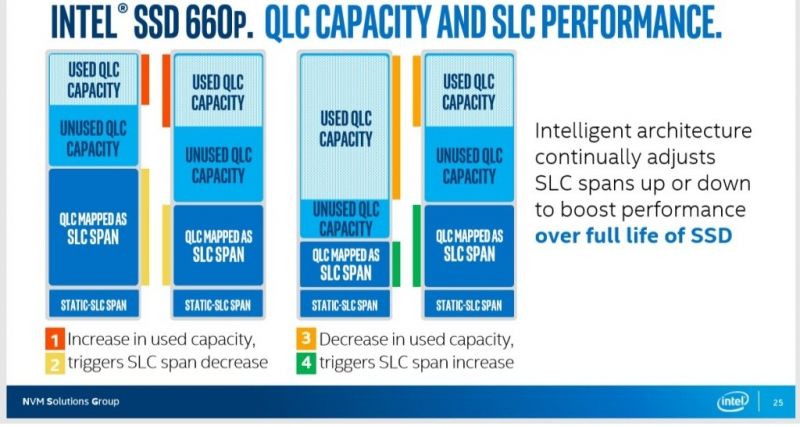
Approximately 50% of the flash memory array can be converted to SLC mode on an Intel SSD 660p 512 GB. This allows you to write up to 70 GB to the drive in accelerated mode. But even in this case, the performance of linear writing is limited to 900-950 MB / s, not to mention that after filling the cache, when writing begins to be performed in the main memory array in four-bit mode, the performance is reduced to quite deplorable indicators. However, despite the fact that Intel SSD 660p is a fairly slow SSD by the standards of NVMe models, in most cases it is still obviously faster than SATA drives.
Intel SSD 660p has three interesting features in its SLC caching implementation algorithms. First, the SLC cache of this drive has a static portion of 6 GB for every 512 GB of SSD capacity. It allows you to maintain high write speed even if the SSD volume is almost completely occupied by user files and it is not possible to deploy a large dynamic cache.
Second, the contents of the SLC cache are not transferred to QLC memory immediately, but only during relatively long storage downtime. On the one hand, this slightly reduces the efficiency of the cache, which may be full at the right time, but on the other hand, it also allows you to speed up reading operations if data is accessed immediately after it is written. This tactic is particularly effective in benchmarks that measure the speed of reading immediately after creating a test file.
In addition to this, Intel has come up with something very special – the developers decided to put some control over the SLC cache in the hands of the user.
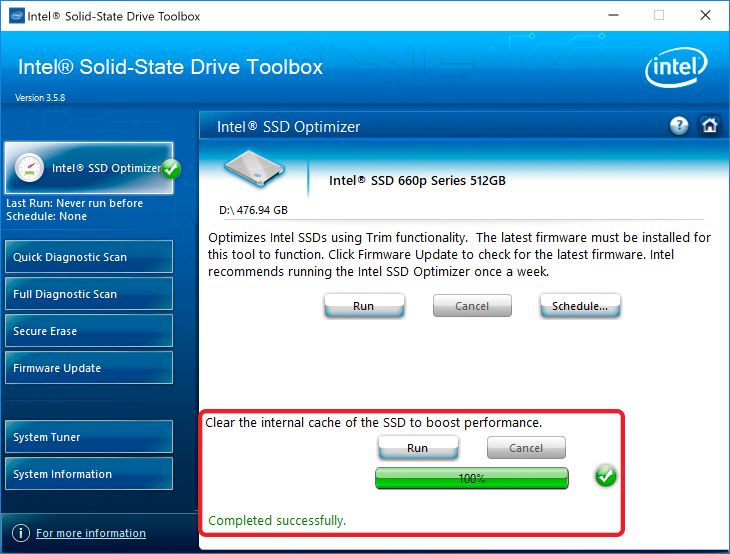
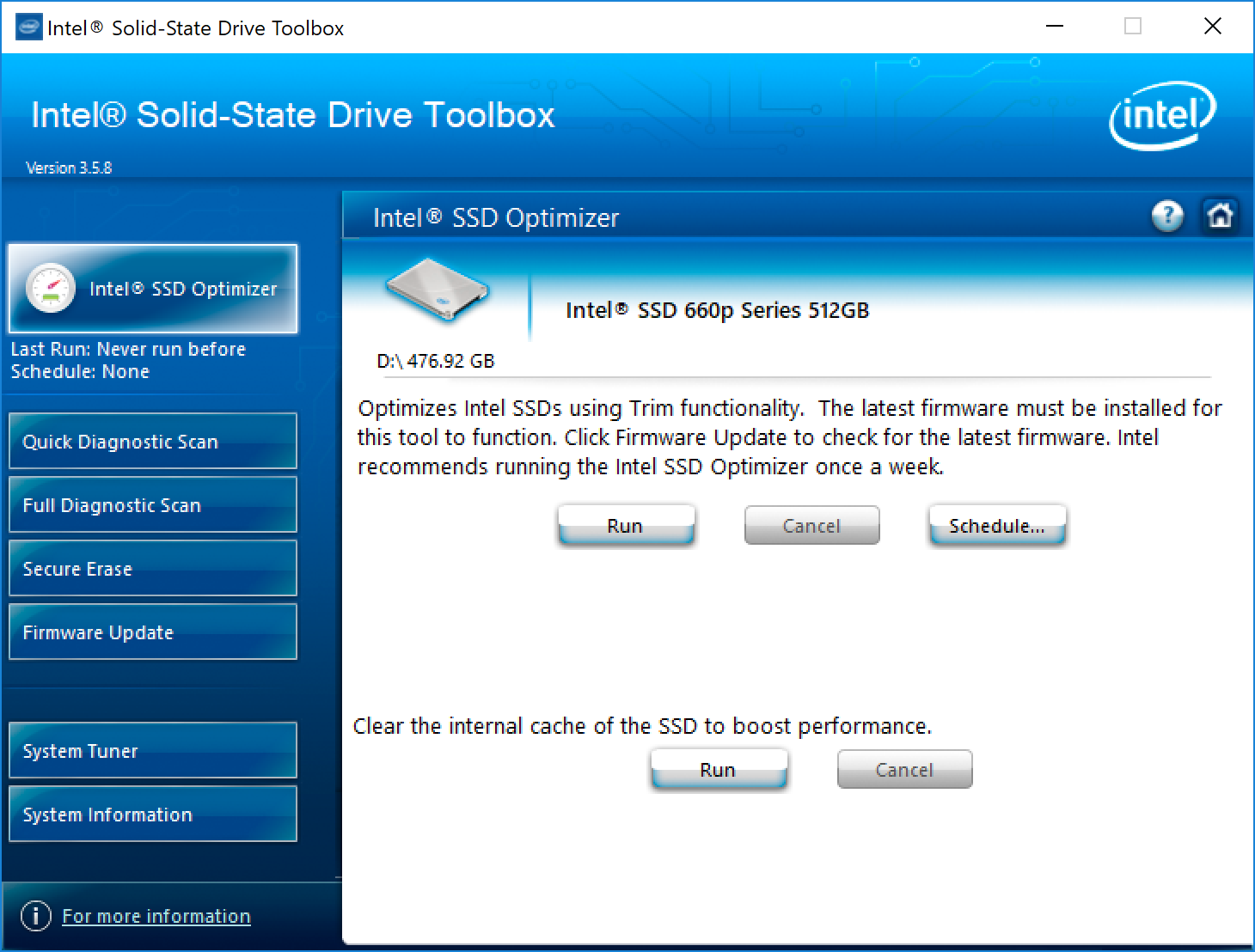
In the proprietary SSD Toolbox utility for 660p, it is possible to send a command to the controller to force the transfer of all information from the SLC cache to QLC memory. And this, obviously, allows you to pre-prepare the drive for writing large amounts of data if necessary.